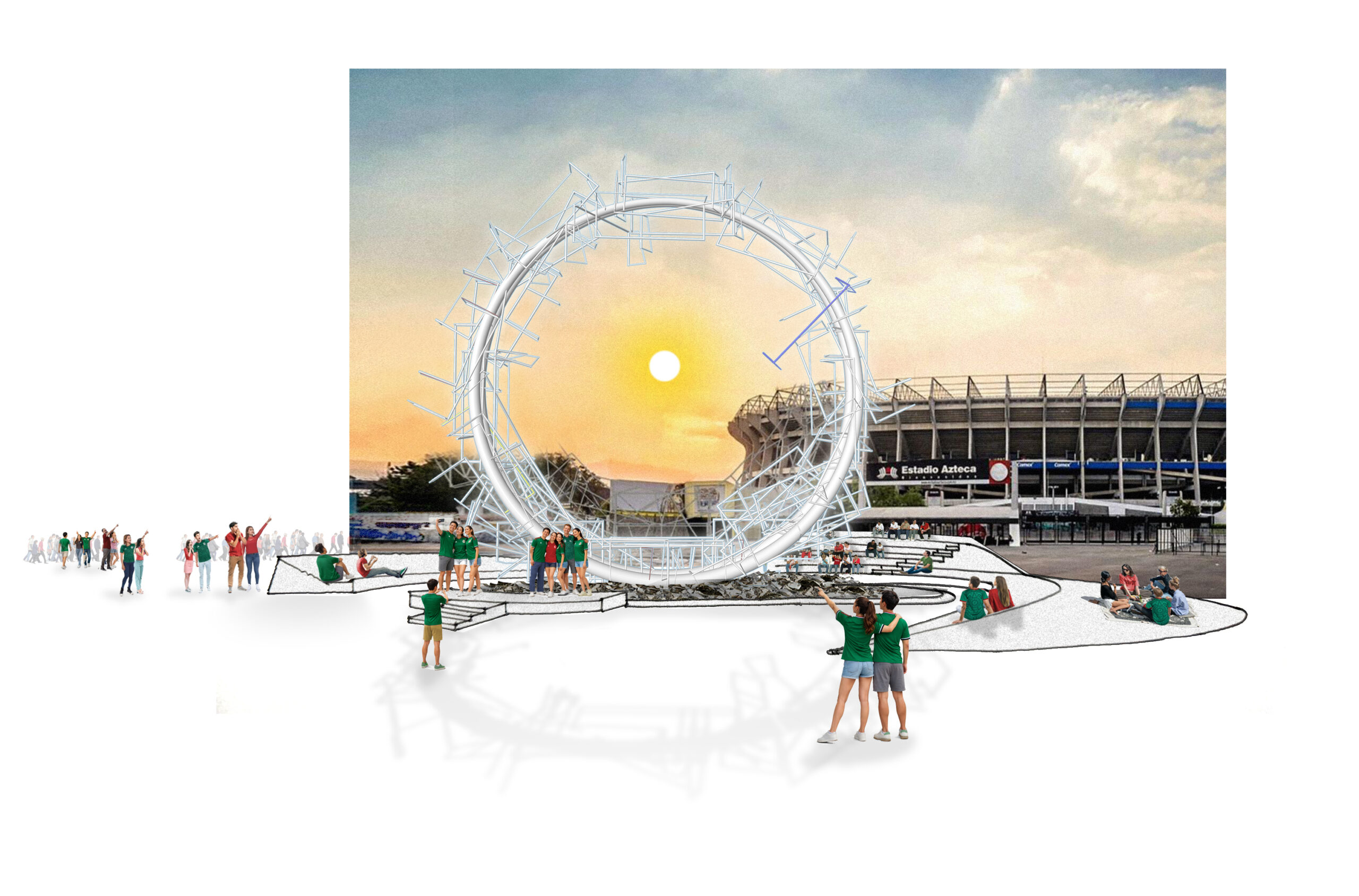
The design of this monument reimagines the grounds of one of the most emblematic Mexican fútbol stadiums, not as a singular object placed within a plaza, but as a shared civic space shaped by time, memory, and collective experience. Developed in collaboration with artist Darío Escobar for the FIFA World Cup 2026, the project reflects a shared belief that this intervention can act simultaneously as a cultural marker and a living public forum, one that honors the past while anticipating future moments of national pride for Mexican fútbol.
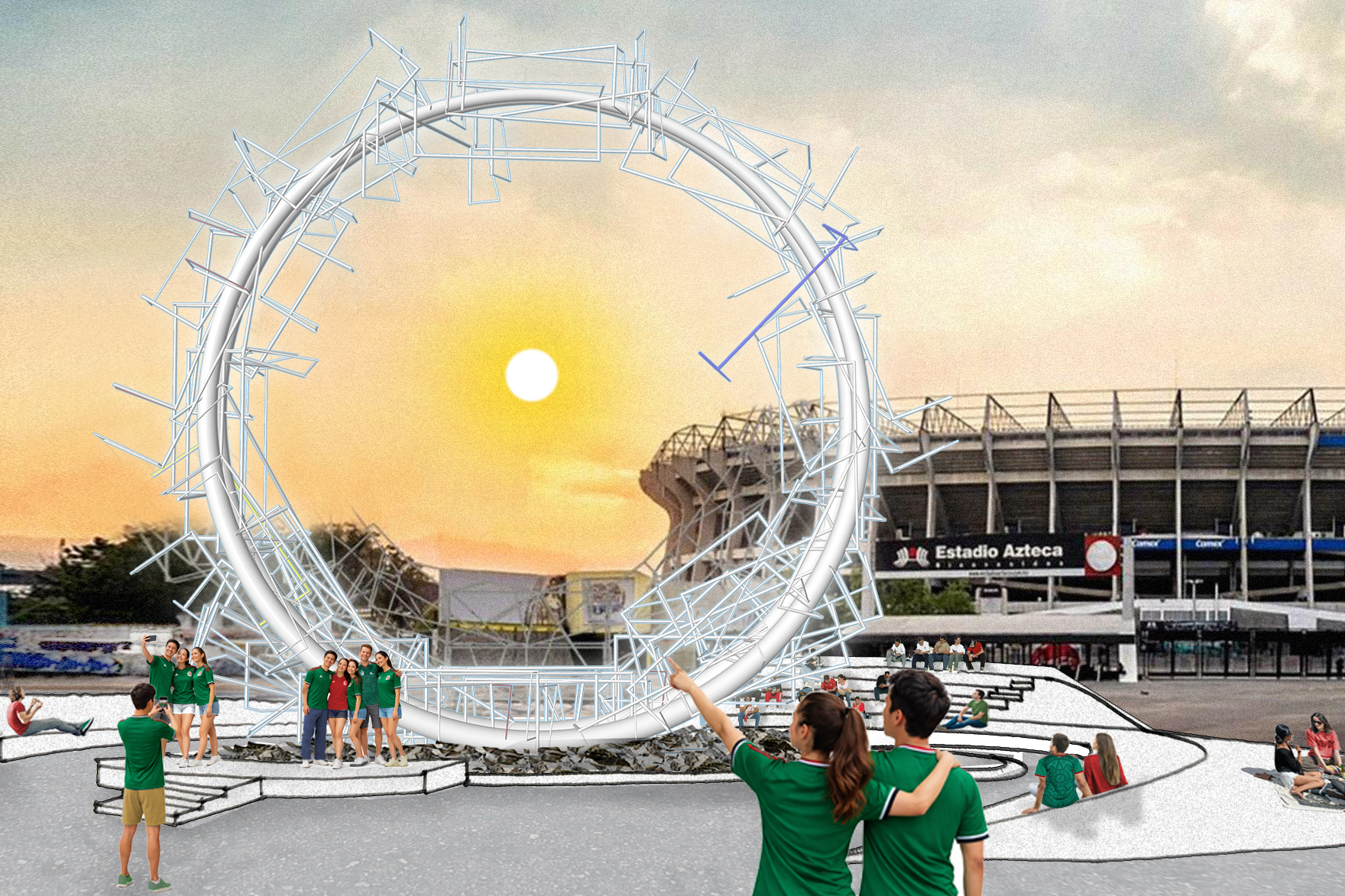
At the center of the project is the monumental “NIDO” sculpture, by artist Darío Escobar, made from repurposed goal posts sourced from public parks throughout all of Mexico. The idea is that by repurposing the old goal posts, new goal posts and fresh fútbol fields are provided for young aspiring players in communities across the country. Once instruments of everyday play, these elements are reassembled into a singular form that carries the physical traces of use, wear, and memory. In doing so, the sculpture transforms familiar objects of fútbol into a collective artifact, embedding lived experience directly into its structure.
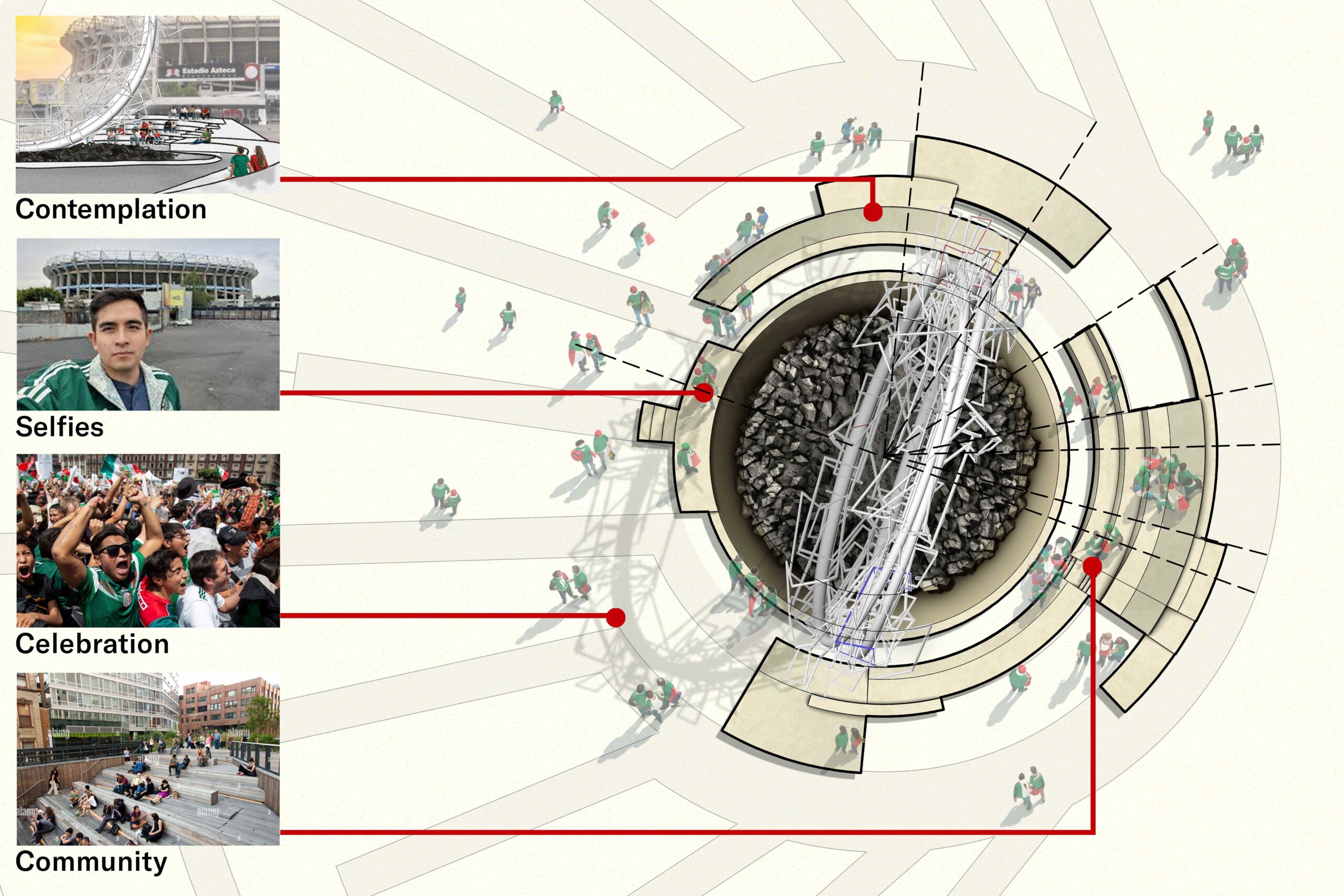
Surrounding the sculpture, a public plaza designed by RGA supports NIDO as a flexible, inclusive, experiential landscape. Designed to accommodate celebration, gathering, reflection, and game-day fans, the space supports moments of collective joy as well as quieter acts of pause and contemplation. Its openness and visibility invite participation, as in Instagrammable moments, while its form encourages visitors to experience the monument from multiple vantage points, both physically and symbolically.
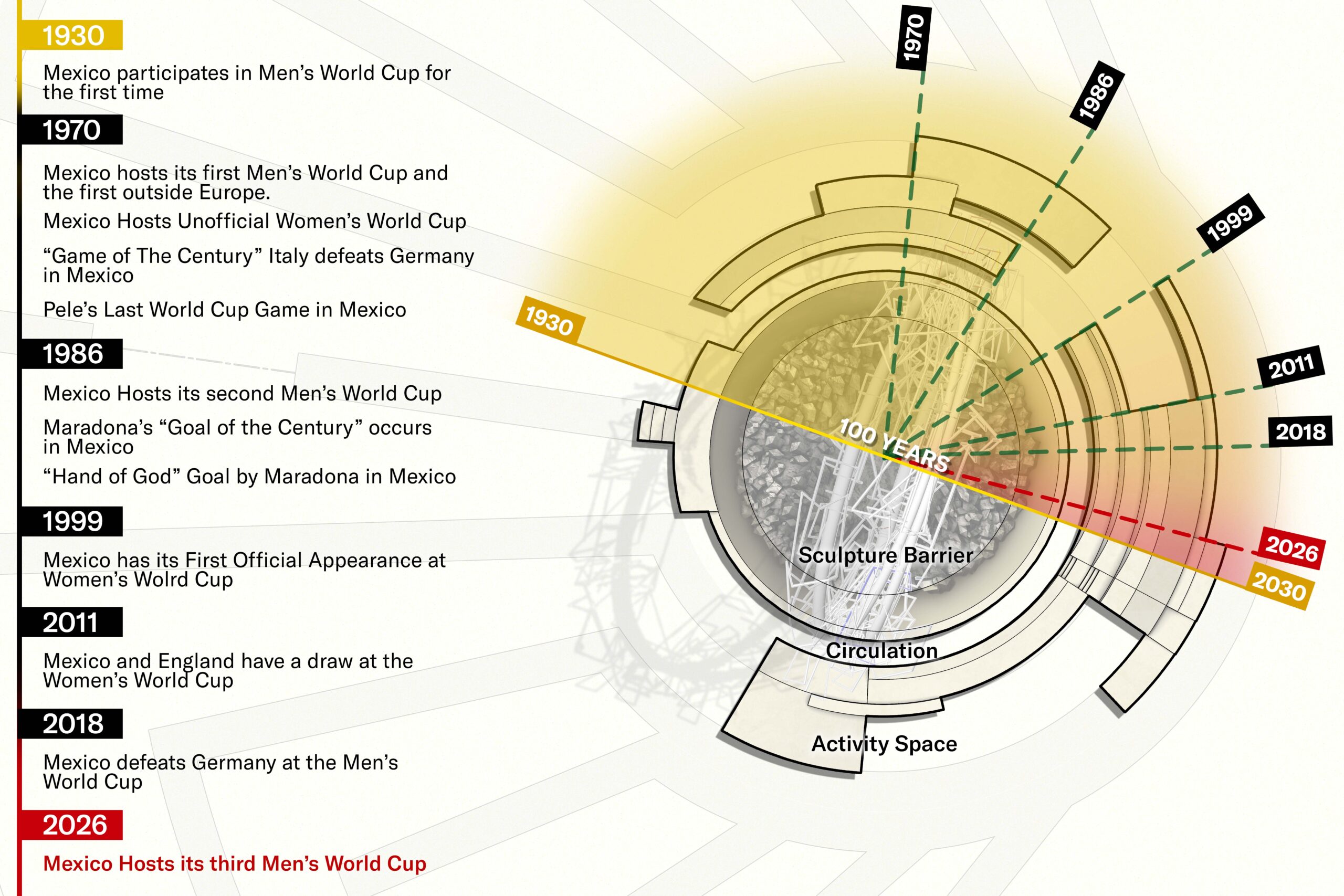
Together, the sculptural monument and the plaza operate as a sundial, a callback to the Aztec Calendar Stone, using the movement of the sun and the casting of shadows to mark pivotal moments in Mexican fútbol history. These temporal alignments transform the sculpture into a spatial archive, where time, sport, and ritual intersect, and where past victories and future aspirations are inscribed into the daily life of the site.
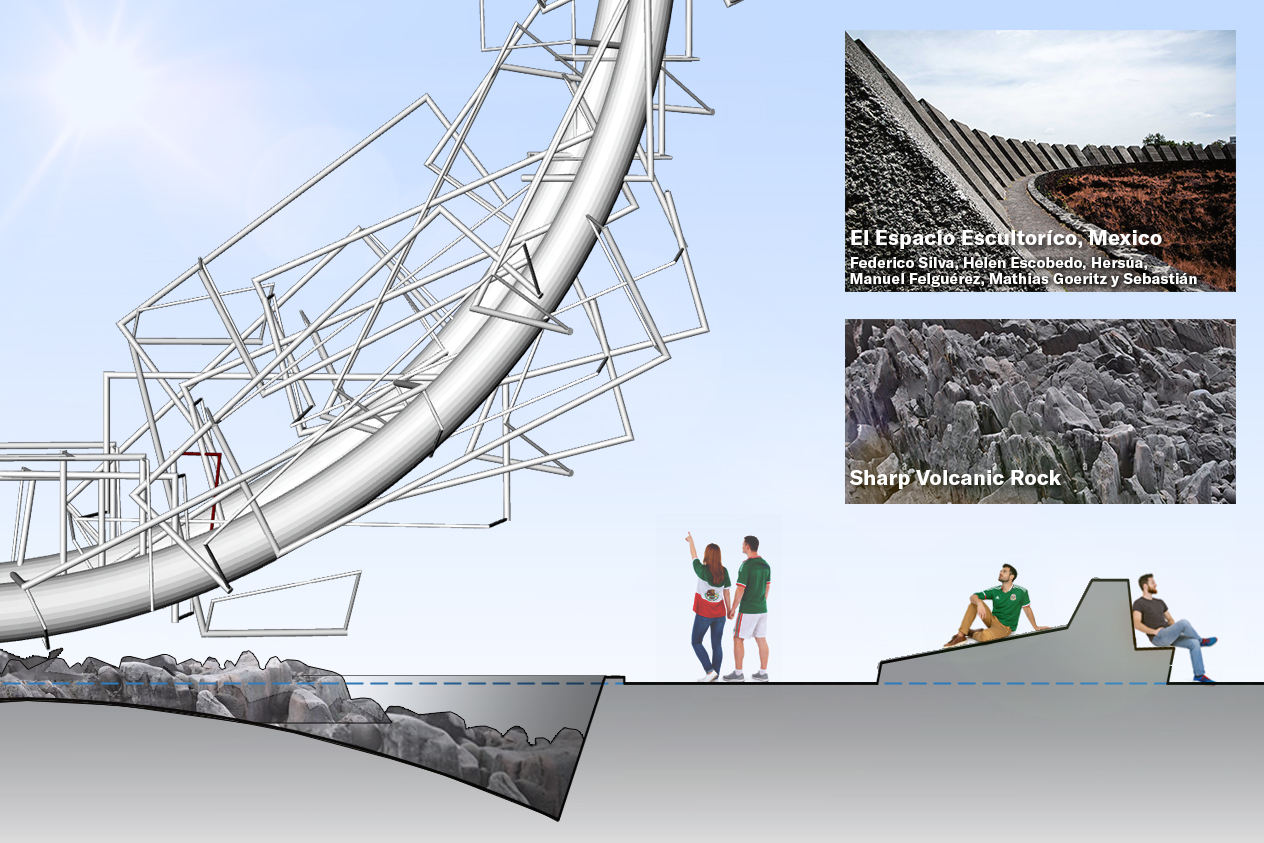
Anchoring the composition, a volcanic stone base forms a protective threshold around the sculpture. Rough and tactile in character, it discourages climbing and physical damage while remaining visually open to the monument. This grounded material contrasts with the lightness of the structure above, reinforcing the project’s balance between monumentality and human scale.
In its entirety, the project responds to the cultural weight of the stadium by transforming materials, movement, and time into a shared architectural experience, one that is at once celebratory and contemplative, iconic and accessible, and deeply rooted in the collective memory of Mexican fútbol.